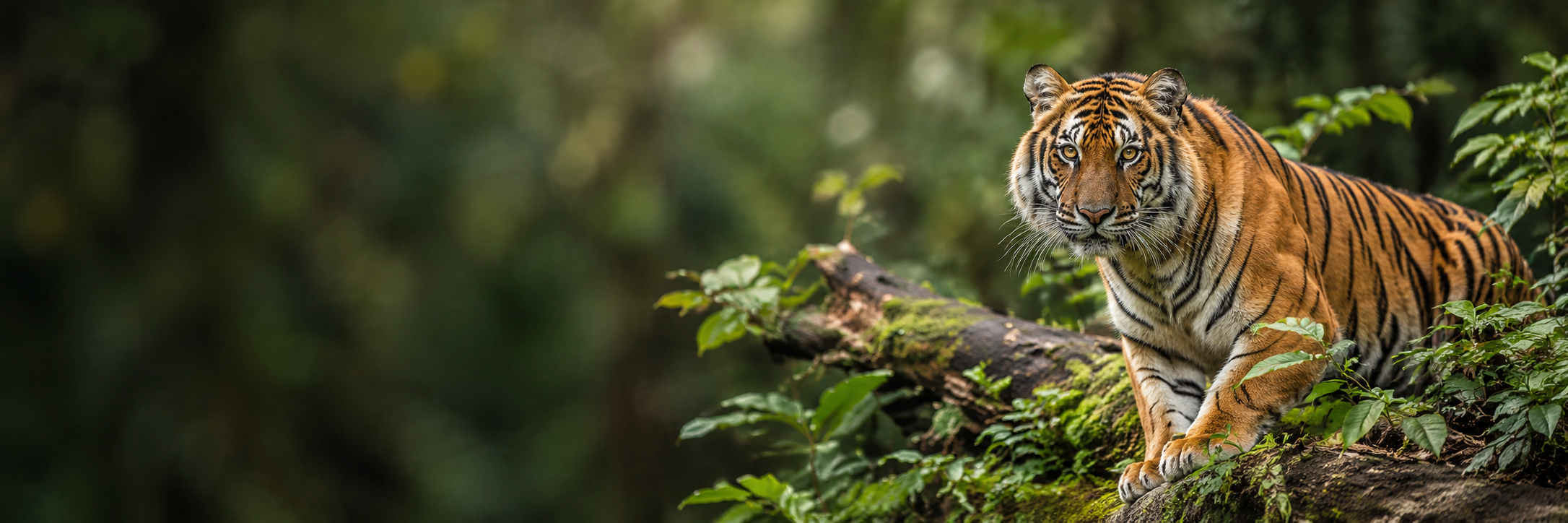
Ranthambore National Park

Welcome to Ranthambore National Park

Discover the majestic wildlife and breathtaking landscapes of India's premier tiger reserve.

Book Now
Sawai Madhopur, Rajasthan

Overview

Every tiger reserve story is incomplete without talking about Ranthambore National Park. This is one of the best places in the world where the chances of tiger sightings are higher than in other places. This place sits in the Sawai Madhopur district of Rajasthan. As the Aravalli and Vindhya hill ranges meet here, the geography of this area becomes unique. From rugged and open terrain to dry and deciduous forest, everything here is different from anywhere in India's wildlife circuit.

The park is home to one of the country's highest concentrations of wild tigers. For daytime sightings, this is the best place. But tigers are not the only things that Ranthambore National Park is proud of.

Ranthambore National Park
Ranthambore core zones
Ranthambore buffer wilderness

This reserve holds leopards, sloth bears, striped hyenas, marsh crocodiles, and over 300 bird species. Every season, lakes and grasslands come to life. Another interesting thing this park has is a 10th-century fort. It sits right in the middle of it. Also, structures of ancient temples are situated in the territory where tigers walk.

The Ranthambore Tiger Reserve spans roughly 1,334 sq km across the Sawai Madhopur and Karauli districts. It has three distinct parts. The core Ranthambore National Park, the Keladevi Sanctuary to the north, and the Sawai Man Singh Sanctuary to the south.

Three lakes (Padam Talab, Raj Bagh and Malik Talab) run through the heart of the park. These three lakes are the main stage for wildlife activity. This is because, in summer, the hot temperature dries up every other water source in the area.

Ranthambore Park never disappoints. This place is suitable for every tourist, whether you want to spot tigers, take photos of big cats or simply want to enjoy a wildlife tour in Ranthambore with your family. Every corner of the park tells the inspirational story of conservation efforts and work.

Inside & Around the Park

Top Attractions in Ranthambore National Park

Ranthambore Fort
01

Ranthambore Fort

Ranthambore Fort stands on Thambhore Hill. It is roughly 700 feet above the forest floor. This fort has looked over this landscape since the 10th century. It covers 102 hectares; the complex holds palaces, stepwells, temples and domed chhatri pavilions. It is a UNESCO World Heritage site. This is where tigers roam freely.

Trinetra Ganesh Temple
02

Trinetra Ganesh Temple

It sits inside Ranthambore Fort. It is about 12 km from Sawai Madhopur. This temple was built around 1300 AD. The interesting part of this temple is that the idol of Lord Ganesha here has three eyes (Trinetra). He is flanked by his two wives, Riddhi and Siddhi, and his sons, Shubh and Labh. The interesting thing about this temple is that it is probably the only one that houses the complete family of Lord Ganesha.

Padam Talab
03

Padam Talab

Padam Talab is the largest lake inside Ranthambore National Park. Its name comes from the lotus flowers (padam) that cover the surface from June through September, turning the water into a blanket of pink. The lake sits primarily in Zone 3. It draws tigers, leopards, deer, marsh crocodiles and a wide range of birds to its edges through the year. Early mornings and just before sunset are when the activity picks up most visibly along the banks.

Raj Bagh Ruins and Raj Bagh Talab
04

Raj Bagh Ruins and Raj Bagh Talab

Rajput-era structures are not in their original condition, but stone ruins, broken arches, domed outhouses, palace steps and weathered walls are enough to tell you the story of this place. It sits right between Padam Talab and Raj Bagh Talab in Zone 3. The forest has grown in and around them over the centuries. From time to time, tigers are regularly spotted resting under the arches or moving along the rubble. Raj Bagh Talab alongside it is the perfect setting to capture photographs. Marsh crocodiles may also be spotted on its beach.

Jogi Mahal
05

Jogi Mahal

Jogi Mahal is just 500 metres away from Ranthambore Fort. It worked as the hunting lodge for the Jaipur royal family. This building is an example of a good piece of Rajput architecture. Also, it is the second-largest banyan tree in the country. The reflections of Jogi Mahal and the banyan tree on the water of Padam Talab create a magical atmosphere.

Kachida Valley
06

Kachida Valley

Kachida Valley is within Zone 5 of Ranthambore National Park. It has something that the main lake zones do not have. The rockier and broken-up terrain attracts the leopard. The ridges and flat boulders become the resting spots for leopards. Sloth bears also appear sometimes. Tigers and crocodiles can be seen moving through it. Tucked in the valley is the Kachida Goddess temple, which is dedicated to a local deity.

Surwal Lake
07

Surwal Lake

Surwal Lake sits around 8 km north of Sawai Madhopur. It is outside the national park. It is a birdwatcher's stop, and over 100 bird species have been recorded here. You can spot flamingos, painted storks, herons, egrets, pelicans and Indian Skimmers. The level of water drops from November through March. The concentration of birds increases, including Siberian winter migrants. Large turtles are also a common sight along the banks.

Chambal River boat safari
08

Chambal River (Chambal Boat Safari)

Visitors can reach the Chambal River in a short drive from Ranthambore. A boat safari here is a type of experience you can not have in any other place. The safari usually lasts around an hour and takes you along sandy banks. Here you can spot endangered Gharial basking alongside Marsh Crocodiles. Also, Indian Skimmers and Gangetic River Dolphins make occasional appearances. Birdwatchers can spot everything from resident birds to migratory birds. The whole experience becomes different.

Dastkar Ranthambore
10

Dastkar Ranthambore

It is a rural craft initiative. Its purpose is to support local women from villages displaced during the creation of the national park. Here, visitors can explore the craftsmanship and rural livelihoods of the local people. Crafts include block printing, patchwork, Bandhani, Rajasthani kantha embroidery and black pottery. Also, they can buy souvenirs from the sales outlet of Dastkar Ranthambore in Sawai Madhopur.

Jeep · Canter · Boat

Types of Safari

01

Gypsy Safari

The Gypsy safari is the type that most visitors choose. It is an open-top six-seater jeep. It takes visitors into one of the park's ten designated zones. Gypsy safaris run across all 10 zones. Zones 1 to 5 are in the core area, and zones 6 to 10 are in the buffer belt.

02

Canter Safari

A Canter is a larger vehicle. It is an open-roofed vehicle that seats up to 20 passengers. It runs through most zones and covers a solid stretch of the lake belt and grassland. The per-head cost of the Canter safari is lower than Gypsy safari. This is the perfect option for large groups, families, and solo travellers. Also, for people who could not book Gypsy safari, the Canter is a good choice.

03

Chambal Boat Safari

The Chambal River is just a short drive away from the park. Chambal Boat Safari is a unique safari experience. This river is one of the cleanest and least-disturbed rivers in India. A boat safari on the Chambal is probably the best way to see Gharials on the sandbars, Marsh Crocodiles, and Indian Skimmers. Apart from them, there are also chances to spot the Gangetic River Dolphin. For birdwatchers, it is also a spot where resident and migratory birds can easily be spotted.

Safari Timings

You can choose any of the three safaris available for morning and evening slots. Early morning is the best time for wildlife sightings and photography.

Safari type Morning Evening Coverage
Gypsy / Jeep 6:30 am–10:00 am 2:30 pm–6:00 pm All 10 zones
Canter 6:30 am–10:30 am 2:30 pm–6:00 pm Most zones
Chambal Boat From 8:00 am Until 6:00 pm Approximately 1 hour

Timings may change slightly according to the season. Always confirm at the time of booking.

Season Guide

Best Time to Visit

October–February

Winter Season

5°C–25°C
Peak Safari Season

Winter is the most comfortable time to be in Ranthambore. During this period, days are clear and warm. For open-air safaris, this is the perfect time. For early mornings and evenings, wear extra layers as the temperature drops. All ten zones are open, water levels in the lakes are good, and migratory birds can be spotted. To make the most of a safari ride, choose this winter season.

March–June

Summer Season

25°C–47°C
Tiger Season

This is the time when leaf cover drops and water sources across the forest dry up. Tigers, deer and sloth bears come to Padam Talab, Raj Bagh and Malik Talab. During this time, these animals spend more time out in the open; for tiger sightings at Ranthambore, April, May and June are regarded as the best months. Choose the morning slot, as in the afternoons the temperature may hit 45°C or above.

July–September

Monsoon Season

25°C–35°C
Lush and Green

Core park zones (1–5) remain closed from July to September. This allows the forest to recover and protect breeding wildlife. But safaris continue in Buffer Zones 6 to 10. Access to safaris in the monsoon season makes Ranthambore stand out. Also, the forest becomes greener due to the rains. The crowd is smaller, and the place feels quieter during this time.

944 AD — 1992

History of Ranthambore National Park

Usually, the story of most parks starts with a wildlife survey, a forest department office and so on. That's where the history of this park becomes interesting. The story of Ranthambore starts with the fort. That's where this park took its name from.

944 AD

The foundations of Ranthambore Fort were laid in 944 AD by Rajput King Sapaldaksha of the Chauhan Dynasty. Over the centuries that followed, successive rulers expanded it into a large hilltop complex. Palaces, temples dedicated to Ganesh, Shiva and Ramlalaji, stepwells and interconnected stone pathways were built across Thambore Hill.

From time to time, control of the fort passed between Rajput clans, the Delhi Sultanate and Mughal forces multiple times. From 1568 to the late 17th century, the fort and its surrounding forests remained under the control of Mughal authority.

17th–20th Century

This is the time when Mughal power became weak, and the Maharajas of Jaipur started to control the forests around Ranthambore Fort. Almost till 1947 (when India got independence), the Jaipur royal family used this area as a private hunting reserve. Big cats like tigers and leopards were killed in the name of sport.

1955

In 1955, with the area being declared as the Sawai Madhopur Game Sanctuary, this park got its first legal protection. Initially, the 282 sq km area was included. Unfortunately, the poaching of tigers continued.

1973

In 1973, the most critical step was taken. WWF-India and the Government of India together launched Project Tiger in this year. The focus was on bringing the tiger back from the edge of extinction. Ranthambore was one of those nine forests which were initially selected under Project Tiger. For the first time, there was proper conservation management and anti-poaching enforcement for tigers.

1980

Finally, on 1 November 1980, 274.5 sq km of the forest was formally notified as Ranthambore National Park. The historic fort complex was already within the protected boundary and became a part of this declared national park. That's how a UNESCO-listed medieval monument sits where tigers roam around.

1983–84

Forests to the north of the National Park were declared the Keladevi Sanctuary (around 1983) and folded into Tiger Project Ranthambore. Then, in 1984, 130 sq km of forests to the south of the National Park were declared the Sawai Mansingh Sanctuary and likewise included. Both were set up specifically to act as a wider buffer zone around the core park.

1992

In 1992, the Tiger Reserve was formally expanded. Keladevi Sanctuary, which was in the north and the Sawai Mansingh Sanctuary, which was in the south, were included along with additional forest blocks. With this new inclusion, the total protected area went up to 1,334 sq km. This expansion gave Ranthambore the geographic size it really needed to have.

Wildlife & Forest

Flora and Fauna of Ranthambore

Flora

Ranthambore's forest cover is Northern Tropical Dry Deciduous, and the Dhok tree (Anogeissus pendula) dominates it almost completely. The park holds one of the largest unbroken stretches of Dhok forest in India. In total, 539 species of flowering plants have been recorded across the reserve. From giant banyan and peepal trees near the lakesides to thorny scrub on the parched hill slopes. Khair, Mango and Jamun grow wherever the ground holds a little more moisture. Ber (Indian Jujube) is an important food source for deer and sloth bears through the dry months.

The open grassland clearings, called chaurs, provide grazing ground for chital and sambar. This prey base is what keeps the tiger population fed. Across the buffer zone forests, many medicinal plants grow that have been used by local communities for generations. Within days of the first monsoon rain, the entire Dhok-dominated landscape transformed from brown and bare to a vivid, deep green.

Dominant Trees

  • Dhok (Anogeissus pendula)
  • Banyan
  • Peepal
  • Khair
  • Mango and Jamun
  • Ber (Indian Jujube)
Fauna

Ranthambore has a high density of wildlife, resulting in better chances of spotting animals. The reserve holds around 38 species of mammals and more than 315 species of birds (resident and migratory). Also, there is a range of reptiles and fish.

Major Mammals

  • Bengal TigerThe flagship species; seen around lakes, forest tracks and ruins
  • LeopardRocky zones away from the main lake areas
  • Sloth BearRocky outcrops; most visible in summer
  • Striped HyenaMostly nocturnal; occasionally seen around dusk
  • Sambar DeerA primary prey species; regularly seen wading in the lakes
  • Chital and NilgaiCommon across the grassland areas

Reptiles

In Ranthambore, Marsh Crocodiles (Muggers) are a regular sight along the lake edges. Also, Indian Pythons, Desert Monitor Lizards and various snakes are part of this wildlife.

Birds

For birdwatching lovers, this park is heaven. There are around 315 recorded bird species here. Some of the birds are Crested Serpent Eagles, Painted Storks, Kingfishers, various Owls and the uncommon Red-headed Vulture. In winter, Padam Talab and Raj Bagh attract many migratory birds along with local birds.

All-Inclusive

Holiday Tour Packages

Weekend Getaway

₹8,999
2 Days / 1 Night
  • 2 Safari Rides
  • Accommodation in Deluxe Room
  • Meals Included
  • Expert Guide
Enquiry Now

Wildlife Explorer

₹15,999
3 Days / 2 Nights
  • 2 Safari Rides
  • Accommodation in Luxury Cottage
  • Meals Included
  • Expert Guide
  • Ranthambore Fort Visit
Enquiry Now

Premium Tiger Trail

₹24,999
4 Days / 3 Nights
  • 3 Safari Rides
  • Accommodation in Premium Suite
  • Meals Included
  • Expert Guide
  • Ranthambore Fort Visit
  • Chambal River Safari
Enquiry Now
Getting There

How to Reach Ranthambore National Park

By Air

Jaipur International Airport is the perfect choice if you are coming by air. Also, it is the nearest airport. It is roughly 160–180 km from the park. It handles strong domestic connectivity from major cities like Delhi and Mumbai. From the airport, options to hire private taxis to reach Sawai Madhopur are available. From here, the distance to Sawai Madhopur is about 3 to 3.5 hours.

By Train

Sawai Madhopur Junction (SWM) sits on the New Delhi–Mumbai main line. It is the closest railhead, just 10–12 km from the Ranthambore National Park. This railway station is well connected with cities like Delhi, Jaipur, Agra and Mumbai through trains.

Kota Jan Shatabdi from Delhi, the Golden Temple Mail, and the Ranthambore Express are some of the important trains that pass through this station. Outside the station, visitors can hire taxis and jeeps to reach the park.

By Road

Ranthambore is well connected through the road network, whether you are coming from North India or Central India. Jaipur is about 157–165 km via NH 52, and Delhi is around 340 km via NH 48. Agra is about 240 km, and Kota is just 114 km away. For most of these routes, state buses and private taxis are available. After reaching Sawai Madhopur town, you can take a local taxi or jeep to reach the entrance of the park.

Before You Book

FAQs

Ranthambore National Park is in Sawai Madhopur, which is a district of Rajasthan (India). Its larger protected area, known as Ranthambore Tiger Reserve, covers around 1,334 sq km across the Sawai Madhopur and Karauli districts.

Apart from Bengal tigers, Ranthambore National Park is famous for dry deciduous forests, three major lakes, diverse wildlife, bird species and the historic Ranthambore Fort.

Choose October to February for comfortable weather, wildlife safaris, and birdwatching. March to June is also a good time for tiger sightings and spotting other mammals, as animals often gather near lakes and remaining water sources. During July to September, the core zones remain closed, but safaris may operate in buffer zones.

Tiger sightings are not guaranteed in any national park, but the chances of seeing a tiger are very high in Ranthambore National Park. Wildlife movement, the safari zone, and the season also play an important role in spotting tigers.

Ranthambore offers three safari experiences: Jeep Safari, Canter Safari, and Chambal Boat Safari. Jeep and Canter safaris take visitors through designated wildlife zones, while the Chambal Boat Safari offers opportunities to spot gharials, marsh crocodiles, Indian Skimmers, and other wildlife.

A Jeep Safari uses an open-top Gypsy that accommodates up to six passengers. A Canter Safari is a larger open-roof vehicle that can carry up to 20 passengers. A Canter generally costs less per person and is suitable for families, groups, and solo travellers.

In the morning, the timing for Jeep safari and Canter Safari is 06:30 am to 10:00 am. While for the evening, for both safaris, the timing is 02:30 pm to 06:00 pm. For Chambal Boat Safari, the timing is 8:00 am to 6:00 pm. Chambal Boat Safari lasts around one hour.

Yes, safari access continues in buffer Zones 6 to 10 during the monsoon season. But core Zones 1 to 5 remain closed from July to September. If you want to see a greener park while enjoying the safari with fewer crowds, this is a good time.

Yes, Ranthambore is a destination for families as well as wildlife enthusiasts and photographers. Observing animals in their natural habitat while enjoying the forest view is the best part of a safari.

Sawai Madhopur Junction (SWM) is the nearest railway station. It is about 10–12 km away from Ranthambore National Park. To reach the entrance of the park from the airport, you can hire taxis or arrange local transfers to reach the park area.

Popular nearby attractions includes Ranthambore Fort, Trinetra Ganesh Temple, Padam Talab, Raj Bagh ruins, Jogi Mahal, Kachida Valley, Surwal Lake, the Chambal River, the Rajiv Gandhi Regional Museum of Natural History, and Dastkar Ranthambore.

Yes, both are important attractions. Ranthambore Fort is a historic hilltop complex containing temples, stepwells, and old structures. Trinetra Ganesh Temple is located inside the fort complex. This temple is known for its three-eyed idol of Lord Ganesha.